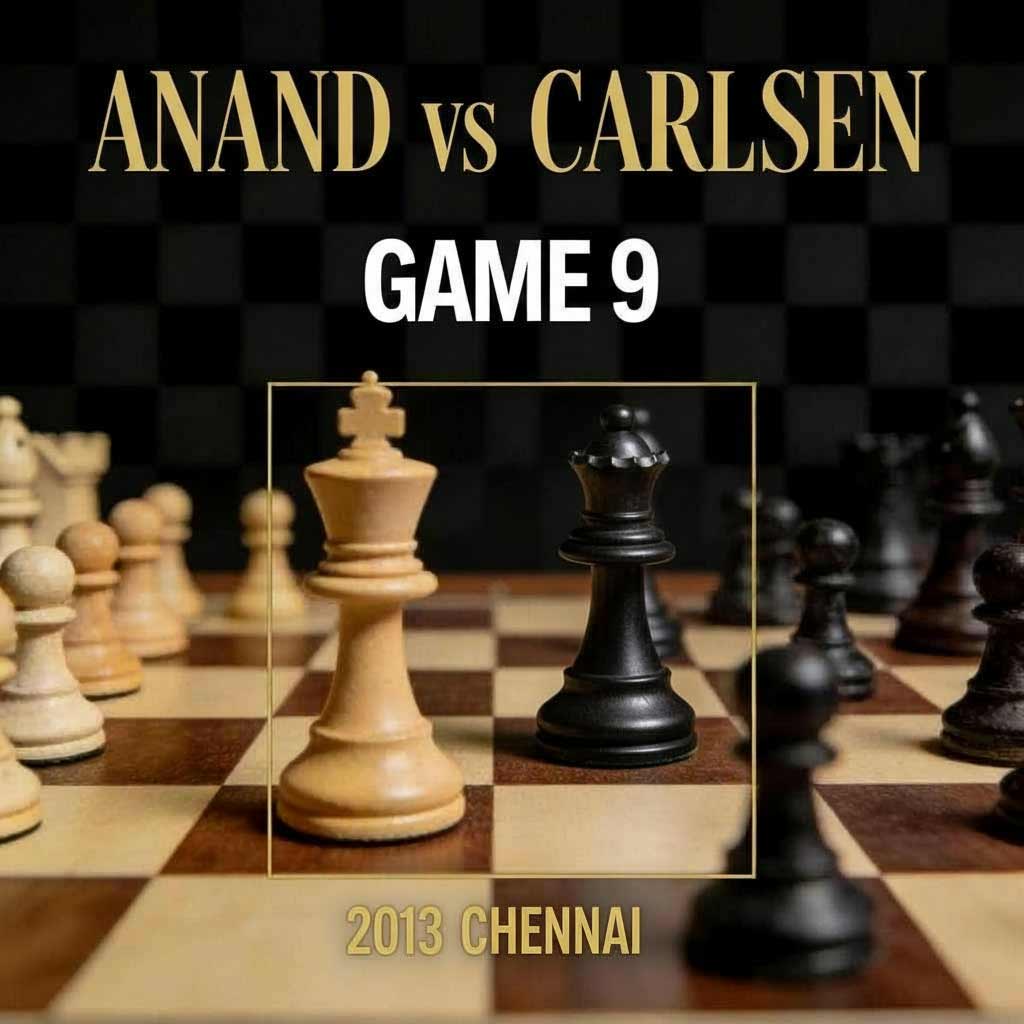
This World Championship game is iconic because it shows Magnus Carlsen’s ability to absorb an attack, defend accurately, and then flip the position with concrete counterplay. Anand chose a sharp Sämisch setup against the Nimzo-Indian to generate kingside pressure, but Carlsen’s queenside passer became faster than the attack.
Why this game matters
- It was Game 9 of the 2013 World Chess Championship match in Chennai, and Carlsen’s win pushed the match to a near-decisive lead.
- The position features a classic modern theme: White attacks the king while Black races a passed pawn, and calculation decides everything.
- The finish is memorable because Anand resigns after a single tactical shot that ends White’s threats immediately.
Key moments (quick guide)
- Carlsen commits early to queenside play and creates a dangerous passer that keeps growing move by move.
- After the pawn queens with check, the defense turns into attack and the tactics become forced.
- The final blow is …Qe1, after which White cannot continue the attack and is simply lost materially.
What to learn from it
- When under attack, look for counterplay with a clear target (passed pawn, open file, or weak king).
- In opposite-wing scenarios, speed matters: converting one tempo into a queening threat can neutralize even a strong attack.
- Train spotting “cold shower” moves like …Qe1—defensive moves that also end the game tactically.